Contents
Our quick picksHow we chose1. 30cm White Flush Ceiling Light2. 15W Gold Flush Ceiling Light3. Monzana 38cm Flush Ceiling Light4. Industrial Black Flush Ceiling Light5. BRILONER 22W White Flush Ceiling Light w6. MiniSun White Bathroom Ceiling Light7. Philips 291mm White Flush Ceiling Light8. Combuh 30CM White Bathroom Ceiling LightHeadroom and dropBrightness for safetyLong corridors and multiple fittingsSwitching and sensorsFAQsHallways and landings are often the darkest spaces in a British house. They tend to be narrow, have little natural light, and need a fitting that clears the heads of anyone carrying a laundry basket upstairs. Yet they are also the first thing visitors see, so a good ceiling light here sets the tone for the rest of the home. Good hallway lighting is also about safety, so we focus on fittings that light the floor and stairs well.
This guide covers flush and semi-flush lights for narrow hallways, square landings and tall stairwells. We look at how far a fitting should drop, how bright it needs to be for safe use of the stairs, and how to space more than one light in a long corridor. We also touch on two-way switching and motion sensors for landings at night. Finally, we look at finishes that suit period houses and new builds, since many British hallways still keep original features like coving and ceiling roses.
Our picks at a glance
- 30cm White Flush Ceiling Light: best overall, £23.98
- 15W Gold Flush Ceiling Light: best budget, £13.99
- Monzana 38cm Flush Ceiling Light: best for narrow hallways, £33.99
- Industrial Black Flush Ceiling Light: best semi-flush, £15.99
- BRILONER 22W White Flush Ceiling Light with Back: best for landings, £30.37
- MiniSun White Bathroom Ceiling Light: best glass, £23.99
- Philips 291mm White Flush Ceiling Light: best modern, £58.99
- Combuh 30CM White Bathroom Ceiling Light: best for stairwells, £14.99
How we chose
We chose fittings that suit typical UK hall widths and ceiling heights, so most picks are flush or semi-flush with a modest diameter. We compared light output, depth, glass or diffuser type and finish, and we included a few fittings for taller stairwells. We favoured listings with clear dimensions, good owner reviews and designs that work in a row of two or three along a corridor.
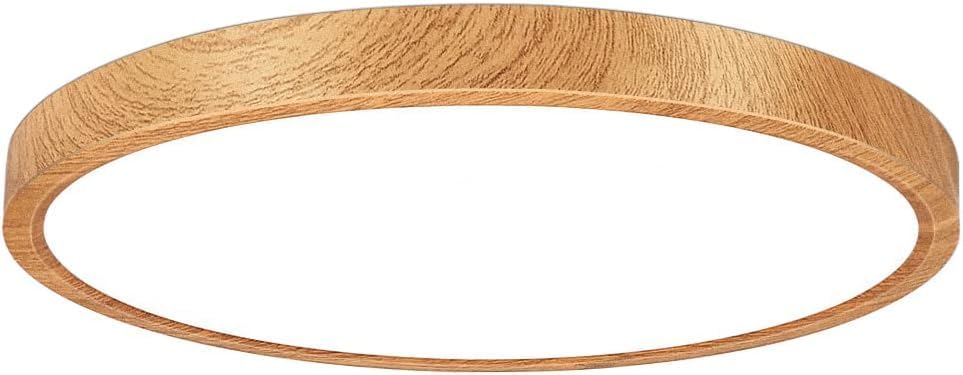
1.30cm White Flush Ceiling Light
If you want the best overall, start here. Specs worth noting: size 12in, power 24W, material Wood. 2,372 buyers rate it 4.7 out of 5. £23.98, one of the cheaper options here. Full details, sizes and photos are on the 30cm White Flush Ceiling Light page.
3200LM
Round Ceiling Lighting
Compare it with the rest of our flush ceiling lights.

2.15W Gold Flush Ceiling Light
15W Gold Flush Ceiling Light is our pick for budget. Specs worth noting: power 15W, colour Gold. 652 buyers rate it 4.6 out of 5. £13.99, one of the cheaper options here. You can see the full specs and photos on the 15W Gold Flush Ceiling Light page.
Ø18cm
Modern
Compare it with the rest of our flush ceiling lights.

3.Monzana 38cm Flush Ceiling Light
Monzana 38cm Flush Ceiling Light is our pick for for narrow hallways. Specs worth noting: size 38cm, material Fabric, colour Taupe. It averages 4.5 stars from 1,475 reviews. £33.99, so you pay a bit more for the spec. You can see the full specs and photos on the Monzana 38cm Flush Ceiling Light page.
Compare it with the rest of our flush ceiling lights.

4.Industrial Black Flush Ceiling Light
If you want the best semi-flush, start here. Specs worth noting: material Metal, colour Black. 2,191 buyers rate it 4.2 out of 5. £15.99, one of the cheaper options here. Full details, sizes and photos are on the Industrial Black Flush Ceiling Light page.
Black ,
If it is not quite right, we stock plenty more flush ceiling lights.

5.BRILONER 22W White Flush Ceiling Light with Back
BRILONER 22W White Flush Ceiling Light with Back is our pick for for landings. Specs worth noting: dimensions 58x20x3 cm, power 22W, colour White. It averages 4.3 stars from 1,582 reviews. £30.37, so you pay a bit more for the spec. You can see the full specs and photos on the BRILONER 22W White Flush Ceiling Light with Back page.
Ultra Slim Ceiling Light with Backlight Effect
30000 lum
There are other options in our flush ceiling lights range too.

6.MiniSun White Bathroom Ceiling Light
This is the one we would point most people to for glass. Specs worth noting: colour White. 1,167 buyers rate it 4.4 out of 5. £23.99, one of the cheaper options here. Have a look at the MiniSun White Bathroom Ceiling Light for the full spec.
Ceiling Spots
Home Décor & Improvement Essential
If it is not quite right, we stock plenty more flush ceiling lights.

7.Philips 291mm White Flush Ceiling Light
If you want the best modern, start here. Specs worth noting: size 291mm, colour White. 751 buyers rate it 4.6 out of 5. £58.99, so you pay a bit more for the spec. Full details, sizes and photos are on the Philips 291mm White Flush Ceiling Light page.
White
Compare it with the rest of our flush ceiling lights.

8.Combuh 30CM White Bathroom Ceiling Light
Combuh 30CM White Bathroom Ceiling Light is our pick for for stairwells. Specs worth noting: size 30CM, power 48W, colour White. It averages 4.3 stars from 1,049 reviews. £14.99, one of the cheaper options here. You can see the full specs and photos on the Combuh 30CM White Bathroom Ceiling Light page.
IP44 Waterproof
Round Modern Lighting Fitting for Bathroom
There are other options in our flush ceiling lights range too.
Prefer to browse everything? Our full ranges of flush ceiling lights have more sizes, finishes and price points than we could fit here.
Headroom and drop
Most UK hallways have ceilings around 2.3 to 2.4 metres, and people walk directly underneath the light. A flush fitting is the safest choice in this case, since nothing hangs low enough to hit. Semi-flush fittings with a short drop of 20 to 30 cm can work if the ceiling is a little higher, but check the overall height before buying. It also helps to measure from the floor to the lowest part of the fitting, not just the ceiling. That tells you exactly how much clearance is left for a tall person.
Stairwells are different. The ceiling above the stairs is often much higher than the hall, which lets you use a longer fitting or a semi-flush design that fills the space. Just make sure you can reach it safely to change bulbs, or choose integrated LED so you rarely need to. Very tall stairwells may need a long pendant, which is outside the scope of this guide. For those spaces, flush fittings on the landing ceiling plus a wall light on the stairs can work just as well, and they are much easier to maintain.
Brightness for safety
Hallways and stairs need enough light to see each step clearly. A dim fitting with a decorative shade can leave the stairs in shadow, which is a trip hazard. Look for a fitting that gives a good spread of light downward and pick a lumen output in line with the size of the space. Pay special attention to the top and bottom steps. These are where most trips happen, so make sure the light reaches them without casting long shadows from the banister.
A neutral or warm white both work in halls. Warm light around 2,700K feels welcoming at the front door. If you have a long, dark corridor, a slightly cooler 3,000K to 4,000K can make it feel brighter and cleaner. Keep the colour consistent with nearby rooms so the change is not jarring as you walk through. If your hallway has dark walls or wooden floors, which absorb light, choose a slightly higher output to make up for it. Pale walls bounce light around and need less, so you can afford a softer fitting.
Long corridors and multiple fittings
In a long hall, one central light leaves the ends dark. Two or three matching flush fittings spaced evenly give a more balanced result. As a rough guide, leave around 1.5 to 2.5 metres between fittings, depending on their size and output. Keep the fittings in a run matching in style and colour temperature. Mixing a warm fitting with a cool one in the same corridor looks odd, especially at night when the hallway is all you see. Matching sets help keep the space calm.
If you only have one light point, a spotlight bar with heads aimed along the corridor is an alternative. For a full renovation, recessed downlights in a line give the cleanest look. Each option needs different wiring, so plan with an electrician if you are adding new points. Before adding new light points, check where joists run and whether the ceiling has cables you can extend. In older houses, lath and plaster ceilings may need extra care when cutting. A short survey by an electrician saves surprises later.
Switching and sensors
Halls and landings usually have two-way switching, so you can turn the light on downstairs and off upstairs. Replacing the fitting does not change this, but any smart bulbs or dimmers you add should be compatible with two-way circuits. Most electricians can tell quickly whether your circuit is two-way or three-way, which affects how smart switches are wired. It is worth checking before you buy any smart parts, especially with older wiring in period homes.
For night-time trips, some people add a fitting with a built-in motion sensor or a low-level night light mode. These can save fumbling for a switch in the dark. Check the sensor range and whether it can be turned off when not needed. A soft low light on a timer is another option, keeping the landing just bright enough to see during the night without disturbing anyone asleep in nearby bedrooms or waking children.
Frequently asked questions
What is the best type of light for a narrow hallway?
A flush ceiling light is usually best, since it keeps the full headroom free. Pick one with a modest diameter that suits the width of the hall, and a diffuser that spreads light down and to the sides so the walls are lit as well as the floor.
How bright should a hallway light be?
Bright enough to see the floor and stairs clearly, especially at night. Hallways need less light than kitchens, but dim decorative fittings can leave stairs in shadow. Choose a fitting with a decent lumen output and consider a second light in long halls.
Can I hang a pendant in a hallway?
You can if the ceiling is high enough. Allow at least 2.1 metres of clearance under the lowest point of the fitting so people do not knock it. In most standard hallways, flush or semi-flush designs are safer.
How far apart should hallway lights be?
As a rough guide, space fittings around 1.5 to 2.5 metres apart. The exact distance depends on the size and output of each light. The aim is even light along the corridor without dark gaps between fittings.
Do smart bulbs work on landing two-way switches?
Usually, as long as the switches stay on. Turning the power off at a switch cuts the smart bulb's connection. Some people use smart switches or remote controls instead. Check the product's guidance on two-way circuits before you buy.